
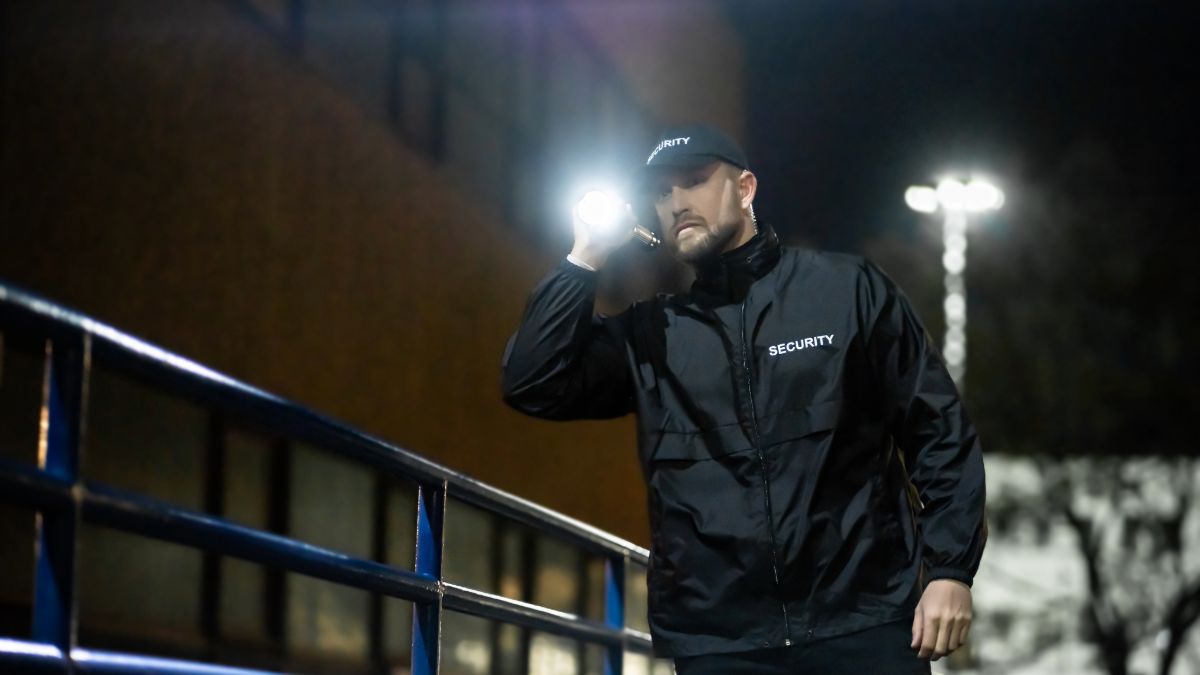
Continuing our subject of the watchman’s responsibilities and reaction, we take a closer look at the example in Isaiah 21. The Bible verse “Watchman, what of the night?” is a phrase found in Isaiah 21:11. It is a question posed to a watchman, asking about the state of the night and what dangers or events might be approaching. The verse is part of a larger section in Isaiah (chapters 21-23) containing prophecies against various nations, including Edom (Dumah). The phrase “Watchman, what of the night?” is a direct inquiry about the time and potential threats. In the context of a watchman on a city wall, this would be a question about what dangers are visible or imminent.
The watchman’s response in Isaiah 21:11-12 is “The morning comes, and also the night. If you inquire, inquire; return, come” suggesting a mixture of hope (the morning) and continuing danger (the night). The passage highlights the role of watchmen as figures of vigilance and warning, tasked with discerning the times and alerting others to potential threats. It also suggests that even in times of relative peace (the morning), vigilance is still necessary.
Francis Dixon expands on our summary above detailing what this means in terms of our responsibilities as Christians:
**1. THE QUESTION THAT IS ASKED:
Twice in verse 11 the question is asked, “Watchman, what is left of the night?” This repetition marks its urgency and the concern of the one who speaks. There is a note of anxiety as the questioner is asking, ‘How long will it be before morning comes?’ From this repeated question we learn two things: –
1. It is now the world’s night-time. Many people, of course, are benefiting from what is called our affluent society; many can say, ‘We’ve never had it so good!’ and yet everywhere there is a deepening moral and spiritual darkness. Sin is rampant, selfishness abounds, man is greedy, and everywhere we hear of war, of want and of – night. In this 21st chapter of Isaiah there are three ‘burdens’ referred to: –
- The Burden of Babylon (verses 1-10), and the word “Babylon” means CHAOS.
- The Burden of Dumah (or Edom) (verses 11-12), and this word means TENSION; and
- The Burden of Arabia (verses 13-17), and this word means SUSPICION, or contention.
How aptly these three words describe the prevailing condition in the world today! Look up Luke 21:26. We are living in the dark, and it will get darker yet.
2. Christians are (to be) the Lord’s watchmen. As Christians we are His disciples to live for Him (John 15:8); His servants to labour for Him (Titus 1:1); His stewards to trade for Him (1 Corinthians 4:2); and His ambassadors to represent Him (2 Corinthians 5:20); but we are also to be His watchmen. We, as children of the light, are set in this dark world, and what is our task? To warn of danger ahead. This is the watchman’s special duty. He must be deeply concerned for the safety of souls – look up and compare Acts 20:20,26,27,31; and Colossians 1:28 with Ezekiel 33:7-9.
The world in which we live is spiritually and morally dark, and it will get darker. Our task as Christians, as children of the light, is to warn men and women of the increasing darkness and of the judgment if they do not find salvation in Jesus Christ.
2. THE REPLY THAT IS GIVEN: “Morning is coming, but also the night” is the reply in verse 12. This seems a strange answer; why did the watchman say “…but also the night?” In the light of prophecy, the answer is this: for the Christian the morning is coming; for the unbeliever the night of judgment is coming. If you are a believer in our Lord Jesus Christ your prospect is the coming of the dawn; if you are an unbeliever your prospect is the dark night of judgment. The “morning” speaks of the coming again of Jesus Christ (Revelation 22:16). Thank God we shall not experience the darkness of sin, of war, of want, forever. Look up Psalm 30:5.
- The morning speaks of the certainty of His coming. Morning always follows night. The burden of biblical prophecy is the glorious truth of the certain return of the Lord Jesus.
- The morning speaks of the nearness of His coming. Sometimes the night seems long, but relatively speaking the morning is always near, and so is the coming of Christ – look up Romans 13:12 and compare James 5:7.
- The morning speaks of the pure joy of His coming. See Malachi 4:2. What a relief it is when, after a long night of trial and difficulty, the morning comes!
With these thoughts in mind, look up and compare John 14:1-3; Acts 1:9-11 and 1 Thessalonians 4:13-18. But how solemn to realise that it is not only the morning that is coming, but also “the night”! – unutterable joy for the Christian but indescribable sorrow, suffering and despair for the unbeliever. Night in scripture always means calamity (Job 35:10; Micah 3:6) and compare John 13:30 with 2 Thessalonians 1:7-9. The Lord Jesus may return today, tonight, tomorrow…Will you be ready to meet Him when He comes?
3. THE APPEAL THAT IS MADE: “If you would ask, then ask; and come back…” is the appeal in verse 12. These words surely indicate that we are to preach the gospel to the unconverted and plead with them to come to Christ.
This is the appeal that we, as the Lord’s watchmen, are to make to people who are still in darkness and in the shadow of death. These words indicate what they must do to be ready when Jesus comes, ready to welcome Him and to escape the judgment that must fall upon the ungodly and the unbelieving.
What will it mean for you when Jesus comes – morning or night? – light or darkness? – deliverance or despair? — **Francis Dixon
Selah
Pastor Afolabi Oladele
Leave a Reply